Five Vulnerable Things: Vol. 11
on resilience, perception, devotion, and choosing depth over distraction

I didn’t realize getting knocked down could make me unbreakable.
Michael and I visited the lush Magnolia Plantation and Gardens in Charleston this past week. We took a train ride, which was more trolley shuttle than train, through the romantic gardens and swamplands to take in the 464 acres without breaking a sweat.
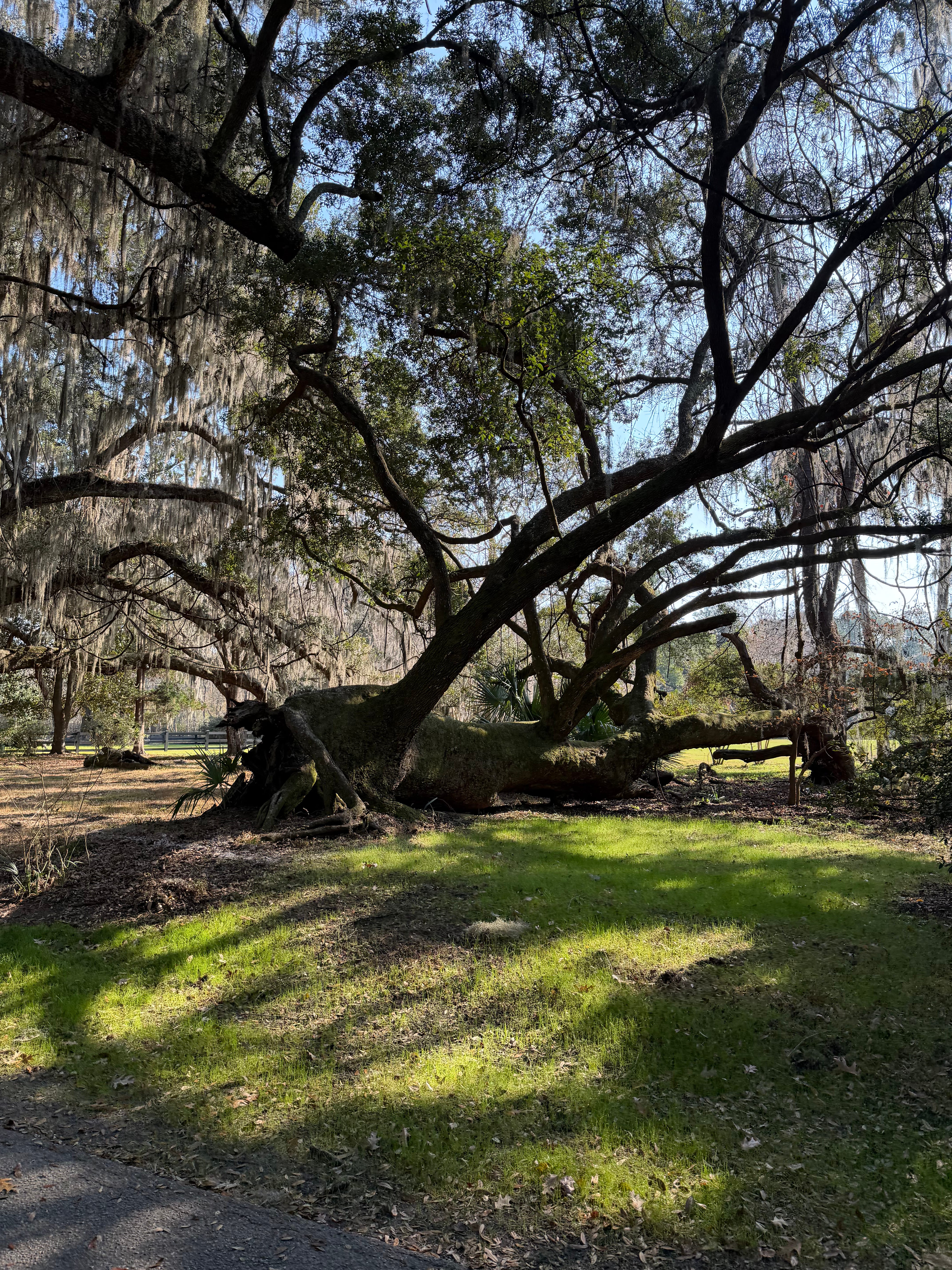
As the tour wrapped up, the moment that lit me up and made all the hairs on the back of my neck dance wasn’t the four-foot alligator resting atop a duckweed-covered habitat. It was a tiny anecdote about a tree that had fallen during Hurricane Hugo, which hit the South in 1989, my birth year, but who cares.
The hurricane wiped out most of the trees along the path. But one that toppled over managed to stay alive and began rebuilding its root system through the side of its own trunk. The tour guide, who looked like a Jamie Campbell Bower lookalike, said something that shook me to my core.
“That fallen tree is now the most prepared for the next storm, because you can’t blow it down twice.”
How profoundly divine and perfect.
Mother Nature teaches not only through beauty, but through ruthless destruction. She shows us that when we fall, we can root back into the earth differently. That the most profound gift of being knocked down is that you cannot be knocked down in the same way again. It gives an entirely new meaning to grow where you’re planted.
I’m constantly humbled by how little I actually see.
The holiday season is a season of rewatching old, nostalgic movies and classics. If it hasn’t landed yet, I am quite the cinephile and consider films some of the greatest teachers on how to live. I seek refuge in cinematography, the score, the storytelling, and most of all, flawed characters.
Something I did differently this season was make a pact with myself. With every rewatch, I would look for what I hadn’t seen before.
You don’t actually see the world in full detail. Only a tiny centre of your vision, the fovea, is sharp. The rest is blurry and low resolution. Your brain fills in the gaps so seamlessly that reality feels complete.
When I set the intention to notice what I’d missed in films I’ve watched a million times, I always found something new. Nuance. Texture. A different emotional entry point.
That same intention creates subtle but seismic shifts elsewhere too. On routine walks, you begin noticing details that were always there. You can even bring this into relationships, especially with people you think you’ve already figured out.
Meet them with fresh eyes. It’s a transcendent practice. One that keeps you in right relationship with how limited, and miraculous, perception really is.
How I do small things quietly reveals how I do everything.
Another new tradition this holiday season has been puzzling with my partner. During the pandemic, puzzling was all the rage, but I hate doing things when they’re mainstream. I have to wait until they go out of style to find them cool again.
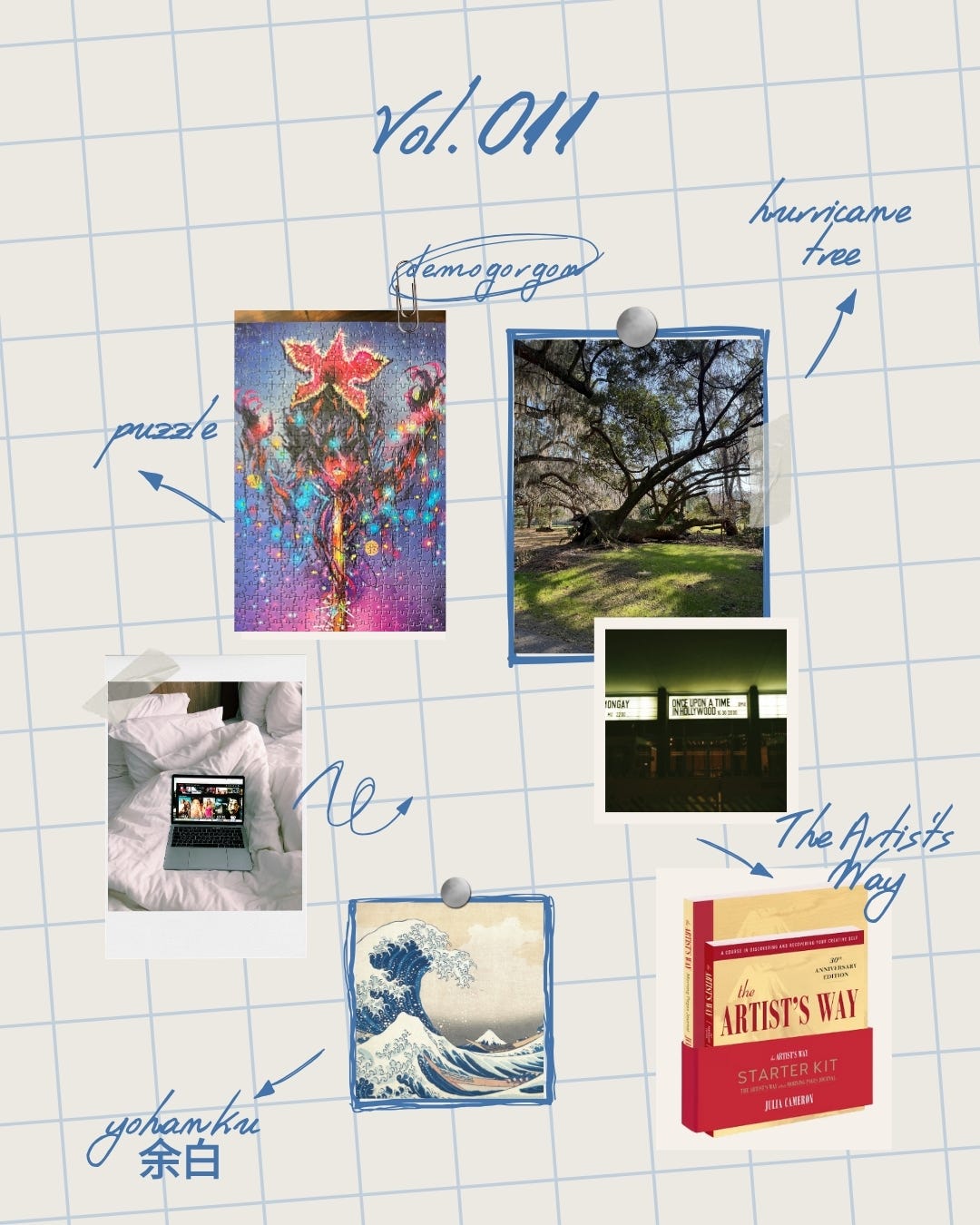
We made an impromptu Target run and bought a demogorgon Stranger Things puzzle. As soon as we got home, we cracked into it. A friend of mine calls these “90s nights,” an analog way to be offline, and I love that.
After many hours of rummaging and nearly losing all my hair to 500 tiny pieces, I can confirm this: how you puzzle is how you do life.
Michael studied the image and placed pieces methodically, one by one, taking frequent breaks. I took a more intuitive approach, batching by colour and shape, trying pieces until something clicked. We were equally successful, contributing 50/50 to the finished puzzle.
What struck me was how differently we regulated ourselves. Michael paced. I became obsessed. Once I started, I felt a visceral need to finish and barely stopped.
When we completed it, we had to dismantle it almost immediately so we could use our wood coffee table again. The thing we toiled over was back in its box, deconstructed.
That’s how most accomplishments work. You reach the finish line, and then there’s a quiet grief in the belly. A what’s next.
But if the placing of each piece is the destination, not the finished image, everything changes.
I’m learning to trust empty space more than effort.
If you take any concept into 2026, borrow this one.
Yohaku (余白) is a Japanese concept meaning “empty space.” More broadly, yohaku no bi refers to the beauty of empty space. It’s not nothingness, but intentional openness that invites imagination, reflection, and possibility.
You see it in Zen gardens, ikebana, paintings, and film cinematography. In Western culture, negative space is often treated as background. In yohaku, it is essential.
Empty space is something everyone can benefit from. You choose your own adventure. Maybe it’s leaving a corner of your home unfilled. Maybe it’s decluttering clothes that no longer match who you’re becoming. Maybe it’s releasing an obligation that no longer fits.
Spaciousness brings relief first. Then discomfort. The urge to fill it.
But when you resist filling space out of fear, something new always emerges. Empty space transforms the very matter it holds.
Less truly is more.


I’ve been avoiding the thing that might actually change me.
After many moons of delaying and avoiding, I’ve decided that 2026 is the year I fully devote myself to The Artist’s Way.
Starting January 1st, I’m committing to the full 12-week curriculum. I’ve always felt the pull, but there was fear underneath. Not fear of failing, but fear of succeeding. Fear of clarity. Fear of unlocking parts of myself I wasn’t ready to meet.
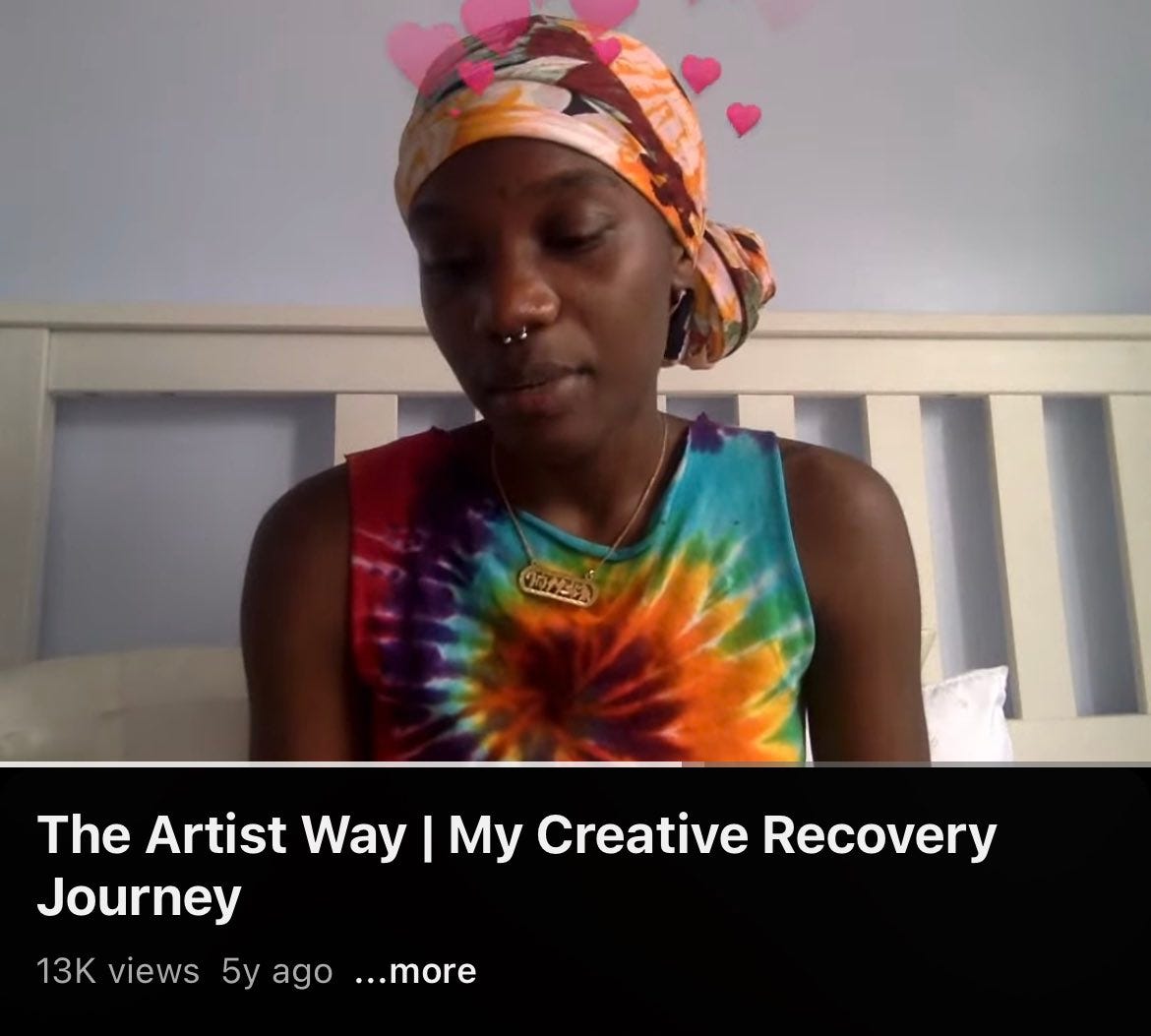
Doechii famously documented her Artist’s Way journey on YouTube, and many attribute her album Alligator Bites Never Heal to that creative breakthrough.
In that spirit, I’ll be documenting my own process and sharing raw reflections over the next three months. Consider me your willing guinea pig.
I don’t know what’s on the other side. I know I’ll never feel fully ready.
So I’m diving anyway, trusting that I’ll keep swimming in the deep end.