

Five Vulnerable Things: Vol. 016
kirtan is teaching me about finding and falling in love with my voice

Hello soul friend,
If you’re new here, I’m Asa. I’m a coach and meditation teacher. Sagittarius sun, Aries moon, Libra rising. Equal parts fire and softness. My life’s work is guiding purpose-driven creatives and leaders out of overthinking and stuckness and into clear, aligned action—so they can reconnect to their life force, trust their voice, and build their vision and dreams with sustainable energy.
At the center of everything I teach is vulnerability.
Sometimes people call what I teach “audacity,” and I like that word too. But to me, audacity is simply vulnerability in motion. Vulnerability is the inner truth. Audacity is what happens when you actually live it out loud.
And something that matters deeply to me is this: I don’t ask anyone to go somewhere I’m not actively going myself.
I don’t teach courage from theory.
I teach from practice. From scar tissue.
If I’m inviting you to speak more honestly, take up more space, trust yourself more deeply, then my own life has to be a living laboratory for that too.
So lately I’ve been asking myself: Where am I still hiding?
The answer surprised me.
My voice.
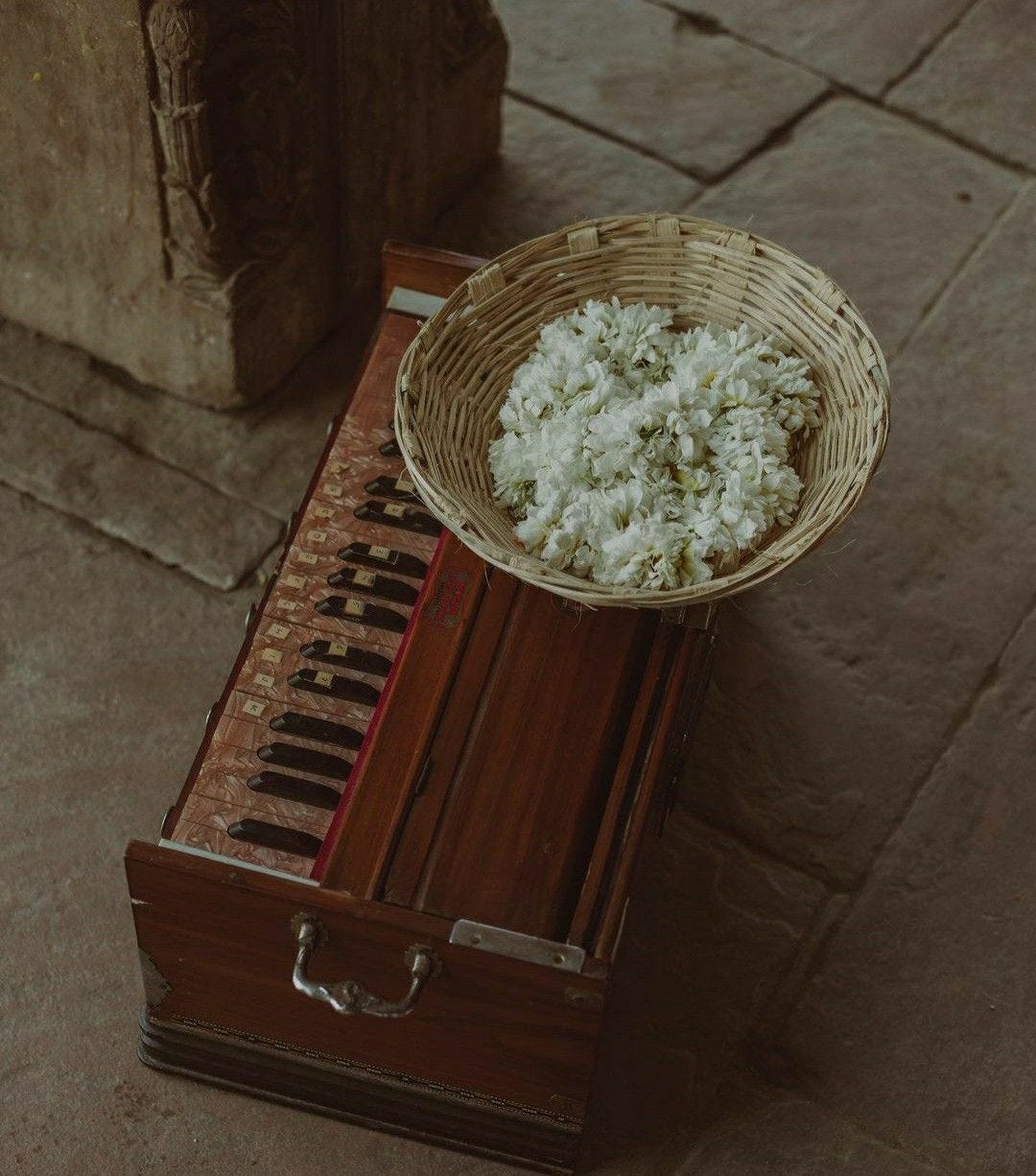
I started taking kirtan lessons online, slowly, at my own pace. Kirtan is a form of devotional singing. Simple call-and-response chants. Repeating mantras. Letting your voice ride your breath. It’s less about performing and more about sincerity.
And part of the reason I’m doing this is very practical.
I want my voice to be stronger and cleaner. For my podcast. For teaching. For coaching. I want my words to land with precision. Like a sword cutting through silk. I’ve started thinking of my throat like the stone that sharpens the blade. Every chant, every held note, every awkward scale is just friction, refining the edge. Not to sound impressive, but to speak with clarity and care for the people in front of me.
It sounds innocent. Almost easy. But for me, it touches something very old.
When I was a kid, a few people made fun of my voice. Nothing dramatic. Just small snarky comments. But it lodged somewhere deep. I quietly decided my voice wasn’t good, wasn’t safe to share, wasn’t something people wanted to hear.
And that story followed me into adulthood.
I stopped singing entirely. Even alone. Even in the shower. There was always this subtle shame, like my voice was something to hide.
So choosing to learn to sing now, at this age, feels surprisingly vulnerable.
In the spirit of walking my own talk, I want to bring you into this season with me.
Here are five vulnerable things this practice is teaching me about finding and falling in love with my voice again.
1. Breath is the foundation of expression
I didn’t realize how shallow my breathing had become until I started singing. This past year especially, my lungs have felt restricted, like my body has been bracing for something, surviving on tiny sips of air. But when you try to hold a note, you can’t cheat your breath. The sound collapses immediately. So every lesson becomes this quiet return to the body. Belly softening. Ribs widening. Air moving all the way down. It feels less like learning music and more like relearning how to live inside myself. I’m starting to understand that having a voice isn’t about confidence first. It’s about breath first.
2. Repetition rewires the mind
Kirtan is mostly the same line over and over. At first my brain wants novelty, wants to judge, wants to ask if I’m doing it right. And then something softens. The mind gets tired and steps aside. What’s left is feeling. The mantra becomes rhythmic, almost hypnotic, like being gently rocked. I don’t have to be clever or original. I just stay. And in that staying, something inside me settles. It feels like the nervous system learning trust. Like the heart getting louder than the mind.
3. The throat holds old grief and older shame
After my first long session, I cried in a way that caught me off guard. Like something had been stuck there for years and finally had a way out. Singing vibrates the exact place where we swallow words, where we hold back tears, where we decide it’s safer to stay quiet. I realized how much emotion I’ve been carrying in my throat since childhood, since those early moments of being teased and shrinking myself. Chanting feels like gently knocking on that locked door again and again until it opens.
4. Devotion dissolves the need to perform
What I love most about this practice is that there’s nothing to prove. I’m not auditioning. I’m not trying to sound impressive. I’m just participating. Offering a sound. There’s something incredibly freeing about doing something with your whole heart and zero ambition attached to it. The question shifts from “Do I sound good?” to “Am I here?” That subtle difference changes everything.
It reminds me that the most honest expression usually comes from devotion, not ego.
5. Taking up sonic space rewires self-worth
I notice how instinctively I make myself small when I sing. I lower my volume. I trail off early, afraid my neighbors are thinking “wtf is this chick doing at home…” I almost disappear. And every time, I have to consciously choose to let the sound be fuller, rounder, louder than feels comfortable. But each time I let my voice actually ring out, something shakes and then steadies inside me. Like my nervous system collecting proof that I’m allowed to exist at full volume. That my presence isn’t too much.
I think this is what vulnerability looks like for me right now.
Small, ordinary courage.
The kind that slowly rewrites an old story.
If this season of your life is asking you step outside your comfort zone, you don’t have to do it alone.
I’m currently opening a few spots for new clients in my 6-month mentorship. It’s intimate, heart-led work. We practice becoming audacious in real time. If you feel that quiet yes in your gut, I’d love to work with you.
rooting for your heart voice to bloom,
Asa